Over the past 18 months, the humanitarian sector has undergone its sharpest funding contraction in recent history. Total global humanitarian financing dropped from $37 billion in 2024 to just $20.5 billion in 2025 a nearly 45% decline in a single year and more than 50% below the 2022 peak. US contributions alone fell from $14.1 billion to $6.4 billion following the freeze and rollback of USAID, previously responsible for almost 40% of all humanitarian funding.
This widening gap underscores an urgent reality: traditional aid models can no longer meet rising needs. This is where the private sector must step in not as a temporary solution, but as a long‑term structural partner.
Carbon finance offers one of the most promising pathways to do so. Market‑linked mechanisms generate predictable revenue tied to measurable climate and community outcomes, enabling refugees and host communities to active participants in implementation, decision‑making, and benefit‑sharing.
Verified carbon credits from clean cooking and ecosystem restoration projects are purchased by companies seeking high integrity climate impacts, with revenue reinvested directly into the initiatives and communities that generate them, moving beyond purely aid dependent models.
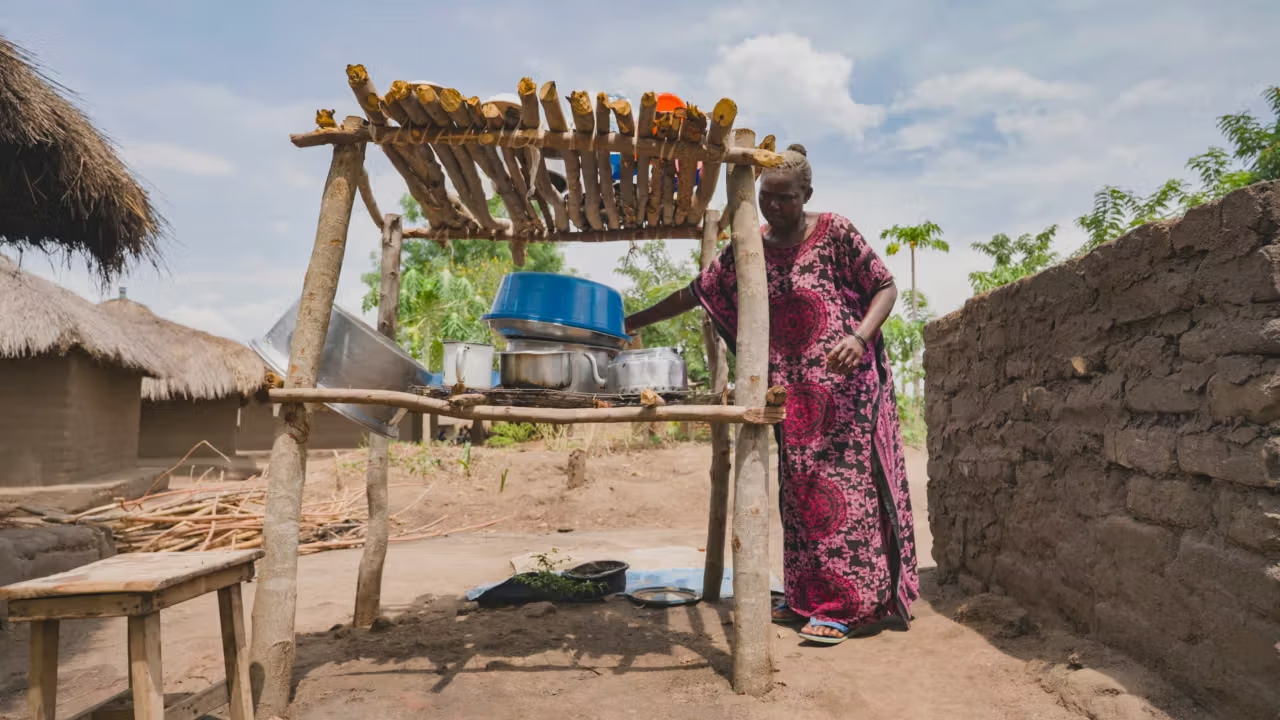
Beyond emissions reduction, clean cooking initiatives deliver proven co‑benefits including major health gains from reduced air pollution, improved safety and dignity for women and girls, and significant time savings for care, study, and livelihoods.
It also lowers household energy costs, eliminates plastic burning and firewood collection, and reduces conflict within households and with host communities.
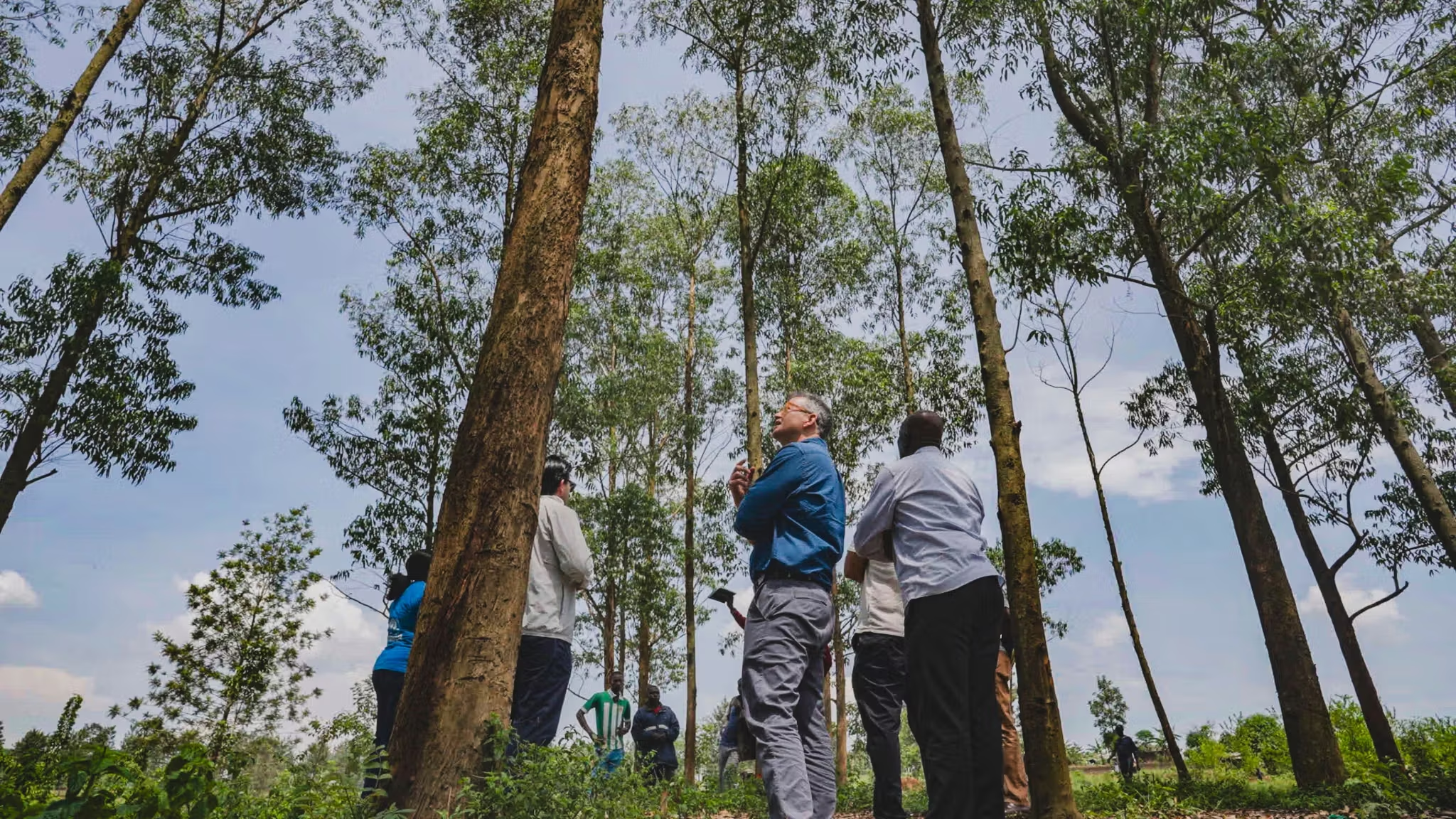
Ecosystem restoration delivers multiple co‑benefits, including training and skills development for farmers on tree integration, sustainable management, and post‑harvest use of timber and non‑timber forest products. Community groups are empowered to manage resources collectively, creating jobs and strengthening local governance.
Planting fruit and timber trees improves nutrition and generates new income streams, while increased tree cover enhances ecosystem resilience, reduces pressure on natural forests, and improves access to essential resources close to settlements.
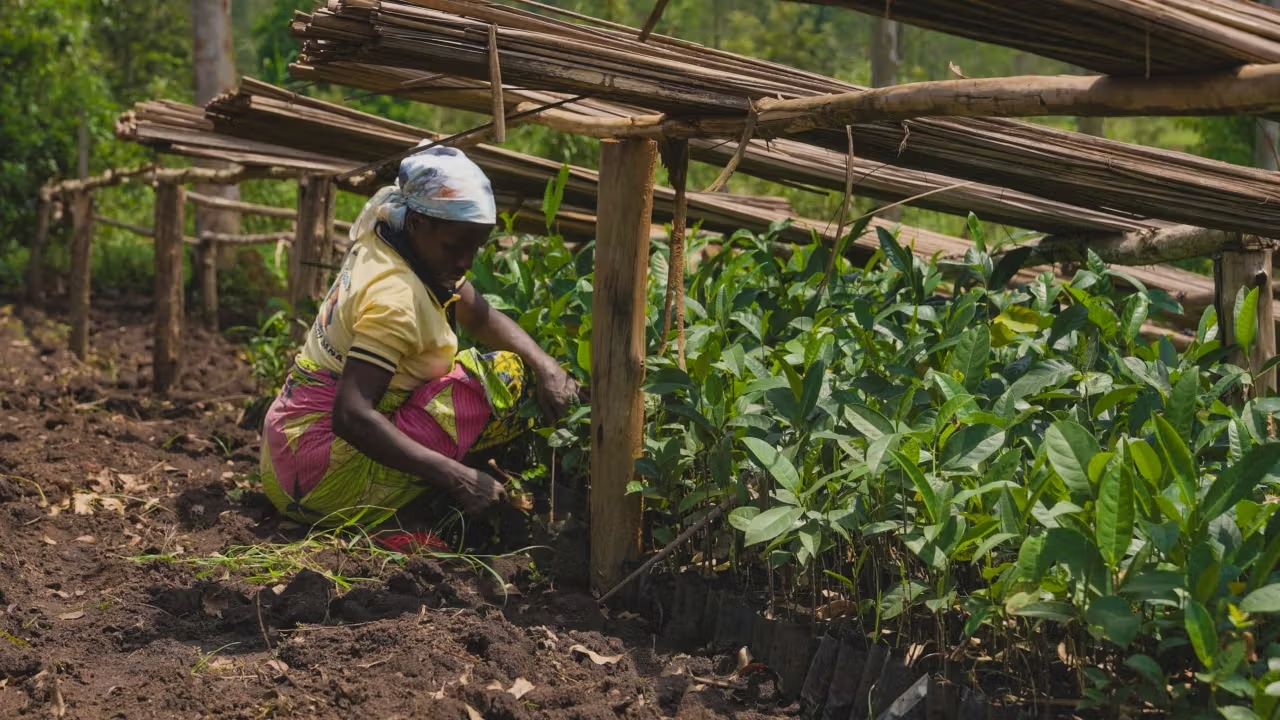
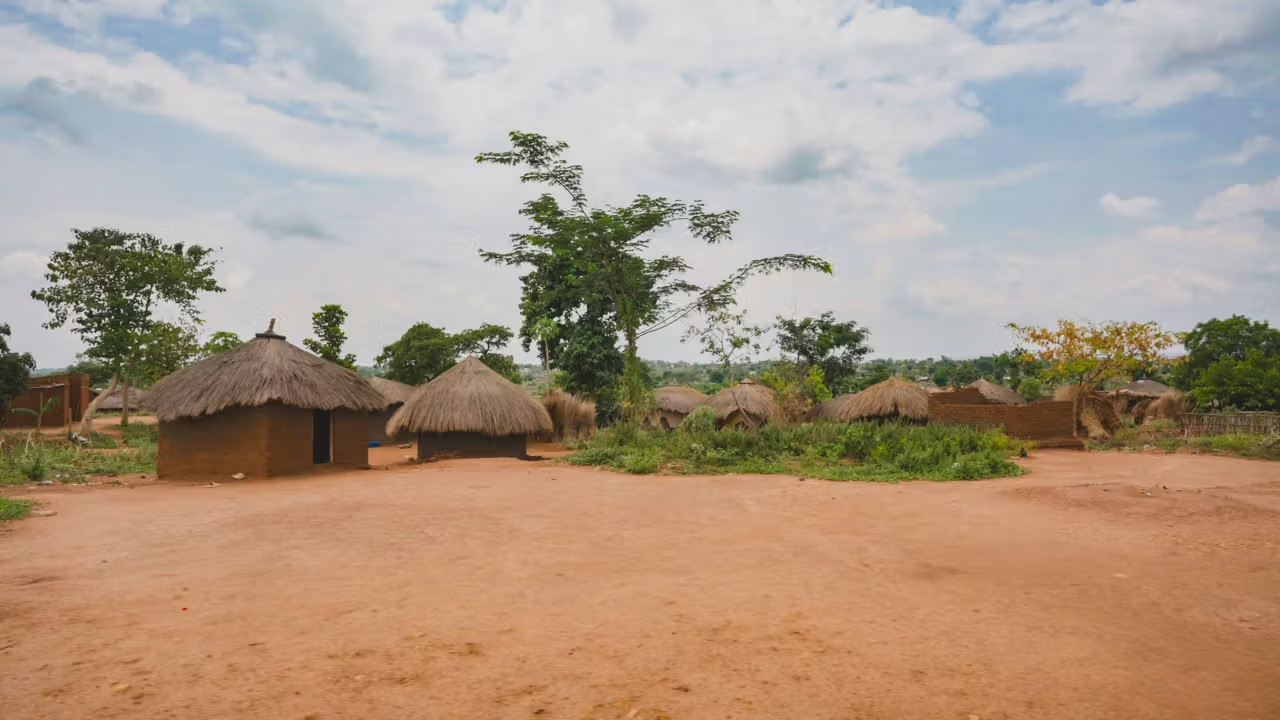
Today, Everpath is helping turn this vision into reality. Through BB Energy, Everpath is participating in clean cooking and ecosystem restoration activities in the Bidibidi refugee settlement in Uganda, as well as LPG clean cooking in Kigeme camp in Rwanda.
These activities form part of the UNHCR Refugee Environmental Protection Fund (REPF) and are delivered through a consortium with Hamerkop and Fairventures, with support from Innovest Advisory on FPIC and community engagement. Across the REPF portfolio in Bidibidi, Kyangwali (Uganda) and Kigeme (Rwanda), the initiatives will:
- Restore 7,000 ha of degraded ecosystems surrounding refugee settlements in the pilot phase and up to 100,000 ha at scale
- Expand access to clean cooking solutions to more than 50,000 families
- Create long‑term local employment
- Generate high‑quality carbon credits to sustain the work well into the future
These pilots have the potential to become a global template for financing humanitarian resilience through carbon markets.
About BB Energy-Hamerkop-Fairventures consortium
- BB Energy is one of the leading independently owned energy trading companies globally. Founded by BB Energy in 2025, Everpath partners with project developers companies, national and supranational governmental bodies and not-for-profits to deliver high-quality, high integrity environmental projects. With roots extending back to the birth of carbon markets Everpath’s proven success across project management, finance and advisory continues to strengthen its reputation in environmental markets.
- HAMERKOP. Founded in 2018, HAMERKOP is an award-winning independent consultancy specialising in carbon finance, energy access and Nature-based Solutions. With offices in London and Singapore, the team has supported over 190 assignments in 50+ countries. With a special focus on Nature-based Solutions and clean cooking projects, HAMERKOP supports the certification, implementation, and impact monitoring of high-integrity projects around the world, enabling their access to the carbon market. HAMERKOP provides end-to-end carbon market expertise and has an extensive track record of providing consultancy services to governments, international NGOs and the private sector. The company’s overarching aim is to support mitigation projects in accessing carbon finance, thereby maximising their social and environmental impact.
- FAIRVENTURES. Fairventures Worldwide is a German non-profit organization founded in 2013. Focusing on reforestation projects and agroforestry, Fairventures and local partners work closely with smallholder farmers and offtakers of goods from agroforestry systems in Uganda and Indonesia. Fairventures and local partners currently support 1,300 smallholder famers in Uganda and have 2,900 hectares of land under restoration.
- Fairventures brings operational expertise and quality-driven reforestation concepts and implementation to the project.
- INNOVEST, Innovest Advisory will act as FPIC consultants to the consortium providing expertise in business models, Free Prior Informed Consent, Monitoring Reporting and Verification and Community Engagement in humanitarian contexts.