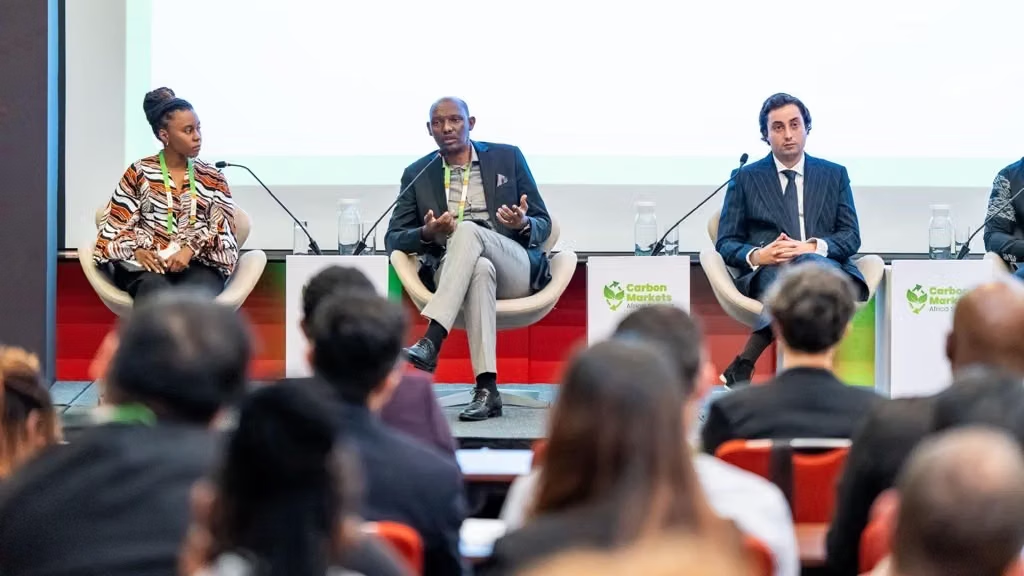
For this second edition of the Carbon Market Africa Summit, from 13 October to 15 October, representatives from 45 countries, including 21 African nations, gathered in Kigali, Rwanda, bringing together stakeholders from project developers to international climate organizations.
During the workshop “Article 6 & CORSIA: from policy to transaction”, Mathis highlighted three key points:
A Significant Supply Gap for CORSIA Phase 1
First, he addressed the supply-demand balance for CORSIA Phase 1 (2024-2026) Approximately 150 million tonnes of eligible units are expected to be required, while only 42 million tonnes are currently available on the market. Based on these figures, the market is projected to face a substantial shortage of eligible units.
A key challenge remains the issuance of Letters of Authorization (LoAs), which are required to supply Article 6-authorized units eligible under CORSIA. According to Sylvera, 80 of the 119 LoAs currently reported on the UNFCCC CARP originate from African countries.
However, additional capacity-building and technical assistance remain necessary to streamline the LoA issuance process: Addressing these bottlenecks could unlock additional supply, attract further investments, and help bridge the projected CORSIA supply deficit while generating new opportunities for project developers across the continent.
Why CORSIA Matters for Africa
Mathis emphasized the importance of the scheme for Africa. Growing demand for eligible units has the potential to improve market liquidity and create new opportunities for African projects.
Rwanda’s Leadership Position
Finally, Mathis highlighted the role of Rwanda in advancing carbon market development. He congratulated the government on its clear vision and proactive approach to implementing mechanisms that support participation in international carbon markets.
Innovative Financing Mechanisms Unveiled
One of the most notable themes throughout the Summit was the emergence of innovative financing solutions designed to accelerate the development of African carbon markets.
- The International Energy agency (IEA) and the World Bank announced plans to develop a clean-cooking bond mechanism for Africa. The initiative will be presented at IEA’s summit on Clean Cooking in Nairobi, Kenya, in January 2027. his announcement is particularly relevant for Rwanda, where 87% of issued carbon credits originate from improved cookstove projects, highlighting the significant role of clean cooking interventions in the country's carbon market.
- FSD Africa, FDS Africa Investments, and UK-based climate investor Finance Earth announced a partnership to establish the Africa Nature Impact Fund, which aims to raise USD 100 million for early-stage nature-based carbon projects across the continent. The fund is expected to support projects capable of avoiding or removing more than 100 million tonnes of CO₂e over their lifetime, helping scale investment in nature-based solutions while promoting sustainable development.
The Road Ahead for Africa’s Carbon Market
Discussions throughout the Summit made it clear that Africa's carbon market is entering a new phase of development. Key priorities identified by stakeholders include:
- Scaling carbon market activity while strengthening regulatory frameworks through greater transparency, efficiency, and predictability.
- Ensuring the robustness and environmental integrity of carbon methodologies, while adapting them to national circumstances and local realities.This is particularly important as international carbon credits increasingly become relevant for compliance mechanisms such as CORSIA or EU ETS.
- Expanding access to financing and risk-sharing mechanisms that can reduce perceived investment risks and facilitate the development of high-quality carbon projects across the continent.
From Potential to Execution
The success of the Summit demonstrated Africa’s ambition in building credible, high-integrity, and economically viable carbon markets, while ensuring that climate finance contributes to local development and economic growth.
As stated by Hon. Hamad Yusuf Masauni, Tanzania’s Minister of State in the Vice President’s Office responsible for Union Affairs and Environment:
“At the Carbon Markets Africa Summit, we declare that the era of potential is giving way to the era of execution.”
Africa has the potential to become a leading force in global carbon markets by 2030, supported by increased investment, robust regulatory frameworks, and high-integrity projects. Everpath is proud to contribute to the development of African carbon markets through its improved cookstove project in Rwanda (VCS 3654) and looks forward to returning to Kigali as the continent continues its transition from ambition to implementation.